
In October, two investigations were published about the sons-in-law of Uzbekistan’s President Shavkat Mirziyoyev: Oybek Tursunov, husband of his elder daughter Saida, and Otabek Umarov, husband of his younger daughter Shakhnoza.
The Mezon explainer desk summarises both pieces.
A family business
Journalists from OCCRP and Ozodlik, the Uzbek service of Radio Liberty, found that Otabek Umarov holds UAE citizenship, which he obtained while he was deputy head of the president’s security service, as well as property in Dubai worth millions of dollars.
Oybek Tursunov, according to Tashkent Times, has in effect become the owner of one of the largest and most expensive complexes in central Tashkent, covering 10,000 square metres, plus another 2,012 items of property.
Let us start with Umarov. According to documents obtained by the journalists, Otabek Umarov became a citizen of the UAE on 19 April 2023. At the time he was deputy head of the security service of Uzbekistan’s president. The law prohibits people holding passports of other states from occupying that position. In other words, acquiring another citizenship not only could but should have been grounds for dismissal. Yet nobody removed Umarov from his job, and he stayed in the post for another year and a half.
But the most interesting part lies elsewhere. Under UAE law, foreigners cannot simply apply and receive Emirati citizenship on general grounds. This requires a nomination by the ruler or a senior official. The procedure includes an oath of allegiance to the emir.
The journalists confirmed that the documents they obtained on Umarov’s citizenship and passport are authentic. But they were unable to establish who exactly had lobbied on his behalf by nominating him for citizenship.
The investigation places particular emphasis on a potential conflict of loyalty. The man responsible for the security of the head of state, it turns out, obtained the citizenship of another country. Leila Seiitbek, an expert on human rights and corruption in Central Asia, points to the risks for counter-intelligence and national security.
“This does not prove that Umarov acted in the interests of the UAE, but it explains why his obtaining the passport raised questions,” she adds.
Otabek Umarov was dismissed in October 2024 after a failed assassination attempt on Komil Allamjonov, the former head of the information policy department of the Presidential Administration and Saida Mirziyoyeva’s unofficial mentor.
The president’s younger son-in-law did not appear in the criminal case even as a witness. But one of those convicted, Shukhrat Rasulov, nicknamed “Zhiguli” and “Kolobok”, whom investigators identified as the organiser of the crime, is described by sources as the right-hand man of the president’s younger son-in-law.
But let us return to what OCCRP and Ozodlik found about Otabek Umarov’s wealth in the Emirates.
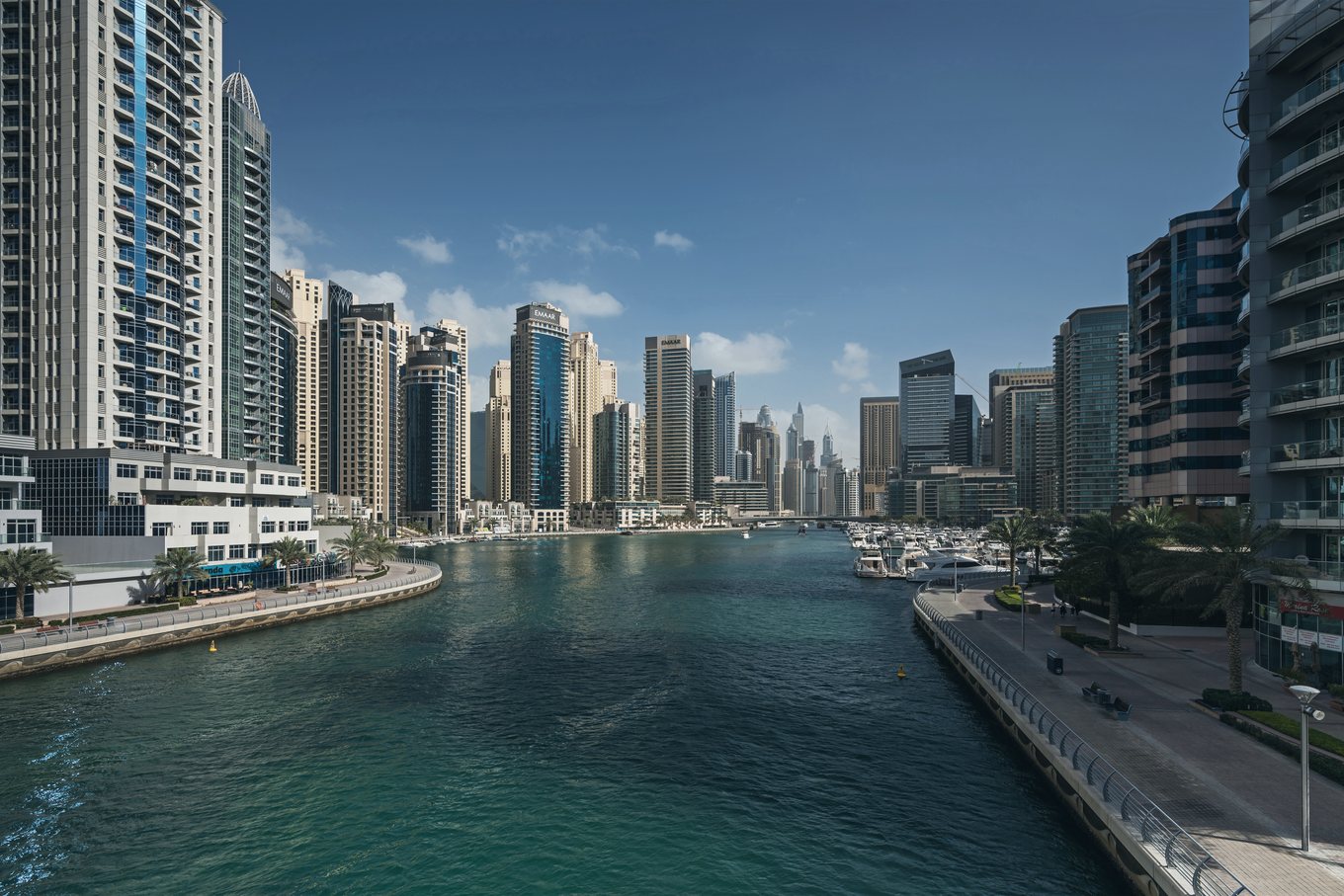
Having analysed the property register and service charge bills, the authors of the investigation established that Otabek Umarov owns 13 flats in Dubai worth $7 million.
“Of these, 11 flats are in the Jadeel complex in the Madinat Jumeirah Living area. They are next to each other and take up practically an entire floor. Two more flats are in the Fountain Views complex in central Dubai, near Dubai Mall and the Burj Khalifa,” the investigation says.
Moreover, the apartments were acquired in 2025. Before that they belonged to the younger brother of the man at the centre of the story, Oybek. He bought these properties in 2021–2022. In 2025 Otabek was listed as the owner of all 13 flats.
The journalists could not establish whether the flats were sold by his brother, given to him or transferred in some other way. So it cannot be claimed that Otabek personally paid for them.
But the OCCRP and Ozodlik team decided to look at the UAE property in the context of the business assets of Otabek’s younger brother.
It has been proven that Oybek Umarov became a shareholder of Orient Finans Bank in 2010, when he was 24. He is also linked to Orient Group, a large holding company that invests in various sectors of Uzbekistan’s economy, including projects that have received state contracts.
His business interests include cement, metalworking, hotels, food and the OU7 sports clubs.
The journalists point out, however, that public commercial registers showed no private companies in Otabek Umarov’s name during the period when he was deputy head of the presidential guard.
But since the law allows Uzbek officials to keep their income declarations out of the public domain, it is impossible to establish how far the value of the Dubai property matches Mr Umarov’s officially known income.
OCCRP and Ozodlik sent requests to both Umarov brothers, to Uzbekistan’s Presidential Administration, to the security service of Uzbekistan’s president Shavkat Mirziyoyev and to the UAE authorities, asking them to comment on the elder Umarov’s citizenship and on his purchase of multimillion-dollar flats in Dubai. No answer came.
Wholesale and retail
At the end of October, the English-language portal Tashkent Times reported that the shareholders of the Uzbek telecoms operator Perfectum had approved the sale to Saida Mirziyoyeva’s husband, Oybek Tursunov, of a complex of buildings covering 10,000 square metres and more than two thousand items of property.
According to the report, the deal took place not just right after but literally at the same time as the signing of the agreement under which the international group VEON is to acquire Perfectum.
The journalists noticed a wide gap between the approved value of the buildings and the price of a square metre in the city centre. More on that below.
So the husband of the head of the Presidential Administration is buying the real estate and other assets of the telecoms operator Perfectum for almost 100 billion soums, or about $8.2 million. The sale was approved by the shareholders of Rubicon Wireless Communication, the legal entity that operates under the Perfectum brand.
Oybek Tursunov has thus become the owner of the complex at 21 Taras Shevchenko Street in Tashkent’s Mirabad district (the very centre of the city. – Note by Mezon), where the operator’s head office is located. The 7,283-square-metre plot holds four buildings with a total floor area of 10,479 square metres. They contain 57 premises, including 47 offices.
“The value of the complex together with the land plot has been set at 65.97 billion soums including VAT. Another 32.41 billion soums is for 2,012 items of the company’s fixed assets. The total price of the two deals is 98.374 billion soums,” the Tashkent Times report says.
According to the corporate decision published on the Unified Portal of Corporate Information, the shareholders backed the sale unanimously. However, the document does not say why Tursunov in particular became the buyer or what method was used to value the property. Nor does it give a detailed list of the 2,012 items of fixed assets.
It was the price of the complex that raised questions. In their investigation of 30 October, Ozodlik’s journalists compared the approved price with advertisements for commercial property on Taras Shevchenko Street and in the neighbouring blocks. Remember, we are talking about the heart of Uzbekistan’s capital.
By Ozodlik’s calculations, Perfectum sold the property for about $529 per square metre of the buildings’ total floor area. For comparison, the investigators cited an advertisement on a listings site for a 157-square-metre commercial property on the same street for $1.13 million. That is about $7,197 per square metre.
Another property of 530 square metres near the junction of Taras Shevchenko and Fidokor streets was on offer for $2.2 million, or about $4,151 per square metre. In the nearby DAHO multifunctional complex, premises of 919 square metres were advertised at around $4,500 per square metre excluding VAT.
Tashkent estate agents interviewed by Ozodlik put the value of commercial property on Taras Shevchenko Street at between $4,000 and $10,000 per square metre. In their words, it is one of the most expensive commercial areas of the capital.
The timing of the decision adds another important detail to the story.
Three days after Tursunov’s advantageous purchase, the international telecoms group VEON announced an agreement to acquire 100 per cent of Rubicon Wireless Communication, the operator of Perfectum. According to VEON’s official announcement, the price is $207 million, including the assumption of Perfectum’s financial debt of about $93 million. In other words, the amount excluding debt is about $114 million.
“VEON explained its interest in the operator by its telecoms infrastructure, including spectrum in the 850 and 3,800 MHz bands and a 5G Standalone network built with Nokia equipment. The acquisition is meant to strengthen the position of VEON’s operator Beeline Uzbekistan,” the journalists note.
Yet the decision to sell the real estate and fixed assets to Tursunov was approved before the agreement with VEON was announced publicly. And in the corporate documents, the sale of the property and the transfer of the operator’s shares are drawn up as separate transactions.
Why are the head office and more than two thousand items of property being sold separately from the operator? How was the price determined, and was the disposal of these assets taken into account when VEON’s acquisition of Perfectum was agreed?
Ozodlik said it had sent Perfectum questions about why the property was sold to Tursunov separately and on what terms. It has not yet received a reply. VEON is silent too.
But this is far from the first time that Oybek Tursunov’s business interests have been the subject of journalistic investigations.
In 2020 Ozodlik published a series of articles about Uzcard. Corporate data from that period showed that the president’s elder son-in-law had obtained a 75 per cent stake in the Unified Republican Processing Centre, which operates under the Uzcard brand. The ownership structure later changed. In a separate article, journalists reported complaints from business owners about payment terminals being switched off, but they did not prove that these decisions were ordered by Tursunov personally.
In 2021 journalists turned their attention to the story of a plot of land in Yunusabad. According to an Ozodlik investigation, land worth at least $11.5 million went to the company Urban Developers for a large commercial project. The investigators found a link between the company and Promadik Invest, whose founders include Tursunov. Representatives of Urban Developers denied the link.
In January 2021 an administrative court ruled that decisions by the hokim (mayor) of Tashkent concerning the disputed plot were unlawful. But the ruling concerned the actions of the city authorities, and Tursunov was not even mentioned in it.
Later, Saida Mirziyoyeva’s husband featured in reports about Kapitalbank. In 2021 his stake in the bank reached 50 per cent, after which the form of the shareholders’ participation changed. Of course, these episodes do not in themselves prove that any business dealings were unlawful, but they give context for examining how major financial and property assets have been distributed during Mirziyoyev’s presidency.
Buying commercial property from a private company is not an offence either. Nor is it punishable that the buyer happens to be the president’s son-in-law.
But in the case of Perfectum, a major asset of a telecoms company is sold to someone from the head of state’s inner circle against the background of a separate deal to acquire the operator itself. And there is no explanation of either the valuation method or the choice of buyer.
In conclusion
One son-in-law of the president obtained UAE citizenship while holding a post in the presidential guard and turned out to own 13 flats in Dubai. The other bought the Perfectum office complex in central Tashkent and another 2,012 items of property for almost $8.2 million, shortly before the sale of the operator itself to the international group VEON was announced. In both cases, journalists found circumstances that call for an explanation, but the only answer is silence. Who helped Umarov obtain Emirati citizenship? Why were Perfectum’s assets valued at exactly this amount, and how did their separate sale relate to the VEON deal? And finally, how transparent are the rules of the game in a country where the head of state’s sons-in-law end up on both sides of deals involving multimillion-dollar assets, and the public learns the details after the fact?