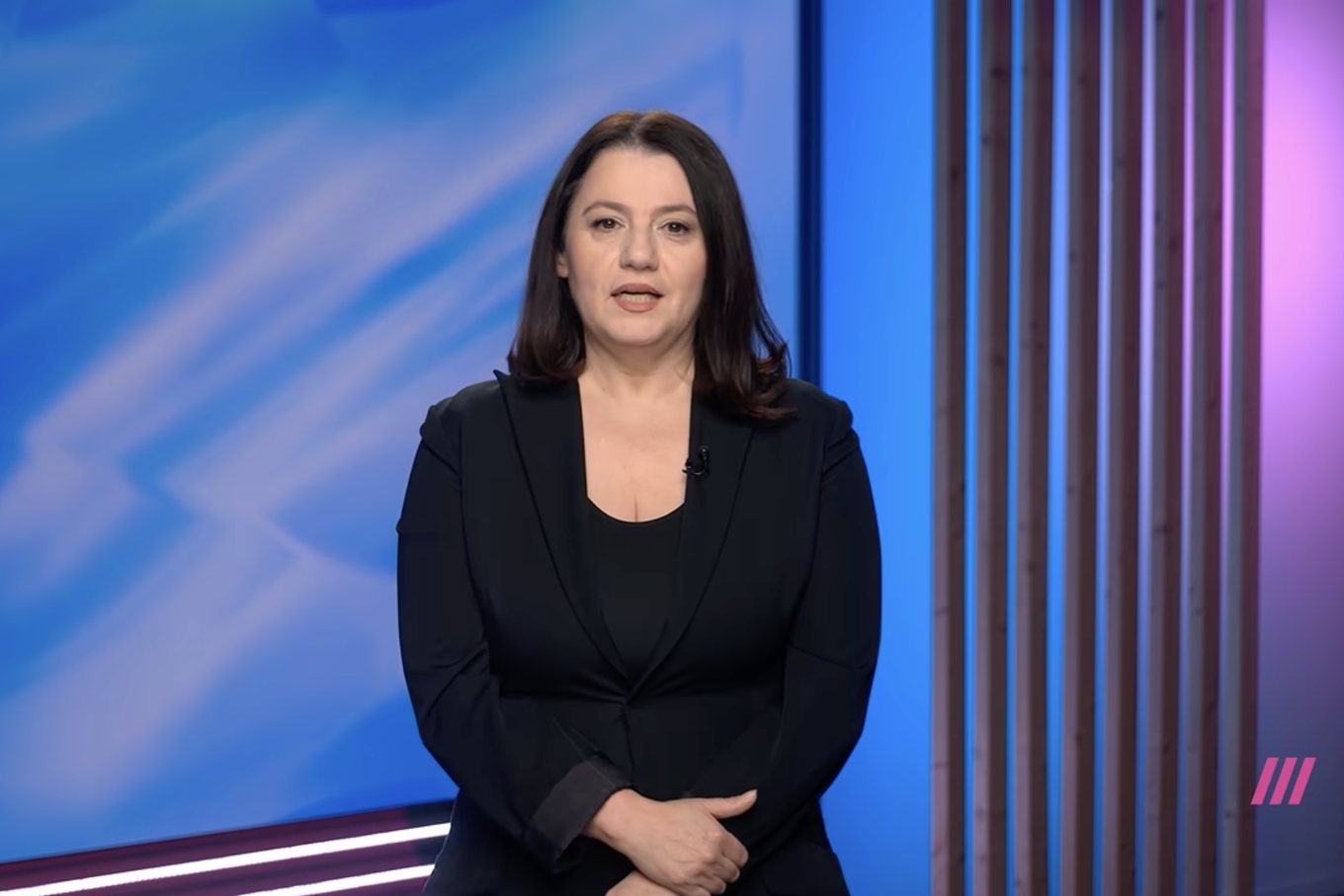
On 29 October, TV Rain (Dozhd) aired an episode of Yulia Taratuta’s programme “Nuances”. This time it was about the ceremony held in Tashkent under the Golden Globe brand: Russian show business, its arrival in Uzbekistan, its links to the Russian channel TNT and so on. The programme goes through all these nuances in detail. We have no complaints about that part. Our point is a different one.
What really grated on the ear was how the host, several times, said the name of the daughter of Uzbekistan’s president, Shavkat Mirziyoyev: ShakhnoZA, with the stress on the last syllable. Her name is in fact ShakhNOza.
One could have let it pass. So what, they got the stress wrong. More than once, admittedly. But it can happen to anyone. To an ear raised on Russian and Ukrainian (the Russian journalist Yulia Taratuta was born in Vinnytsia), the name is, after all, an unusual one.
But it then turned out that the nuances were not limited to names.
Describing Boris Khanchalyan’s connections, the host pointed to his contact with President Mirziyoyev’s son-in-law, Otabek Umarov, the husband of that same ShakhNOza. She also said that Umarov holds the post of deputy head of the Uzbek president’s security service. The trouble is that Umarov left that post back in November 2024. And not just like that, either: he left after a major scandal that turned all of Uzbek politics upside down, forced half of the security elite out of office and sharply shifted the balance of power. This matters, because in an analysis of this kind there is a real difference between a current post and a former one.
Of course, putting the stress in the wrong place in the name of the Uzbek president’s daughter does not in itself disprove what the programme said. Nor does the mistake about her husband’s job mean that everything else is wrong. But taken together, they raise a perfectly professional question: what else went unchecked?
After all, none of this is secret. These are not documents from a closed archive. Not information that people risk their lives to obtain. A name, a job title, the date someone left: this is ordinary editorial work before a broadcast. A look at Wikipedia would have been enough.
And this is where it gets a little sad. Because a familiar feeling sets in: the Russian connections were examined with care, while the local names and circumstances were left as scenery. Who are we, after all, and where is this Uzbekistan anyway? Hardly anyone will notice.
We noticed. And it ended up just like the old joke about the missing spoons: the spoons turned up, but the bad feeling stayed. We will keep watching TV Rain, but from now on we will want to check and double-check what it tells us. Such are the nuances.