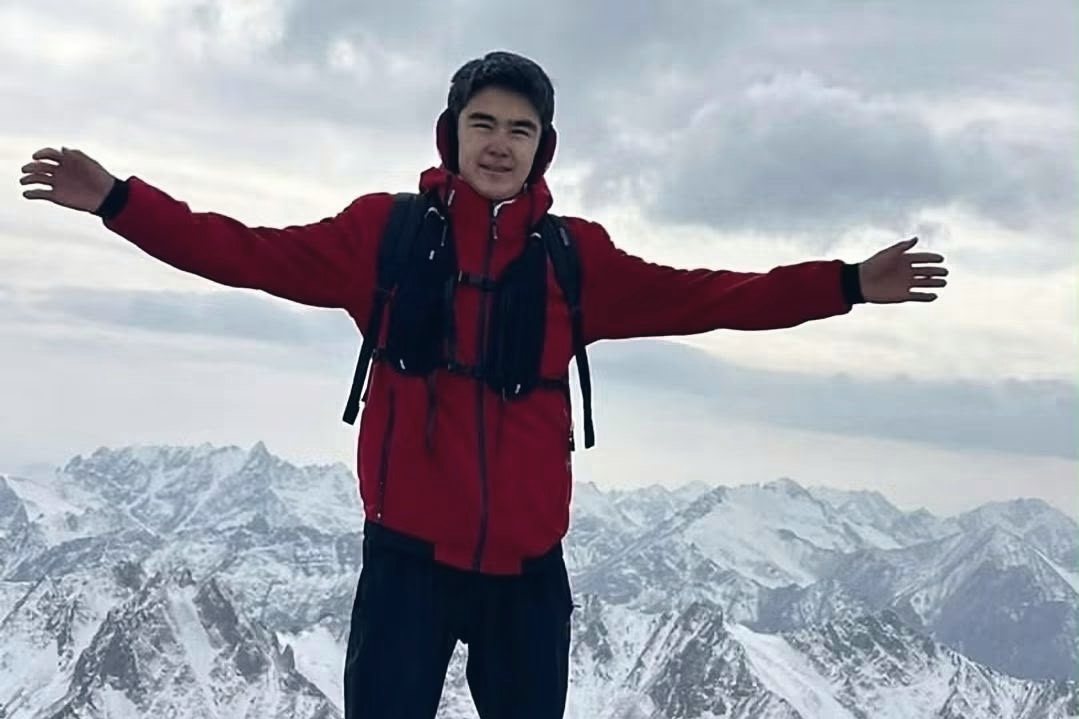
The death of 14-year-old Amir Kunakunov in the mountains near Bishkek is at the top of the region’s news today. He would have turned 15 on 17 November. He loved running, climbed mountains and was keen on astronomy. The teenager got lost in a popular nature park that Kyrgyzstan promotes heavily at state level. He called the emergency service himself. The dispatcher worked out roughly where Amir was. But according to the Emergencies Ministry’s own timeline, the rescue team received the message almost three hours later. The Kyrgyz authorities are now examining how the search was organised. Yet Amir’s story raises a wider question: are the mountains of the region set up so that local people, and the tourists Central Asia is now working hard to attract, can feel safe and be sure that help will come in time?
Almost three hours before the alert was passed on
On the morning of 7 November Amir went to Ala-Archa nature park, where a running race was being held. According to 24.kg, he was not allowed to run because of his age. He then set off alone towards the Adygene gorge. At 19:02 Amir called 112 and said he had lost his way on the descent. Using his location, the dispatcher placed the search area near Elektro peak. Soon afterwards contact with the boy was lost.
When he called, the Emergencies Ministry’s duty team was evacuating tourists near the Ratsek hut. The ministry says that because there was no mobile signal, the message about Amir reached the team only at about 22:00. The rescuers went down to the start of the route. Part of the team carried on evacuating a woman tourist, and three rescuers set out to look for Amir at around midnight.
The search went on through the night and into the next day. Other ministry staff, climbers and volunteers joined it. During the operation Amir’s backpack was found. A helicopter was brought in on 9 November. At about 16:00 that day the boy’s body was found near Elektro peak. Preliminary findings give hypothermia as the cause of death.
Why was the helicopter not sent up the day before? Almazbek Asanov, deputy head of Kyrgyzstan’s Emergencies Ministry, explained that under current rules rescuers search on foot wherever they can get through themselves. A helicopter is called in when a team cannot climb into rocky terrain. In the ministry’s assessment, the area of the last signal could be reached without one.
Kyrgyzstan’s head of cabinet, Adylbek Kasymaliev, has ordered a check of when the alert was passed on and to whom, how the units worked together, and when people and equipment were deployed. The Emergencies Ministry has also opened an internal investigation. One question still has no public answer: could another team have gone out to look for the boy while the duty team was busy with the evacuation and out of contact?
Two cases near Almaty
A few days before the tragedy in Ala-Archa, a 16-year-old went missing in the mountains of Almaty region. He made a video call from Satpaev peak, and then his phone stopped answering. Rescuers had no exact coordinates. According to the Almaty emergencies department, a search headquarters was set up and about 120 people were brought in, with dog handlers, drones and a helicopter. The teenager was found alive on the northern slope and brought down the mountain.
In December 2025 another case near Almaty ended with the deaths of three young people. They went into the mountains on 24 December, and on the night of the 26th a relative of one of them called 112 to say they had not come back. A helicopter, drones, dog handlers and volunteers joined the search. All three were found dead near Lokomotiv peak. The youngest was 17. According to Tengrinews.kz, the group was caught by an avalanche. In that case the alarm was raised by relatives, after the hikers had been out of touch for a long time. Amir, by contrast, was able to report himself that he was lost.
Around Almaty, part of the rescue infrastructure is right in the mountains. There are round-the-clock rescue posts near Shymbulak and Big Almaty Lake. On remote stretches the city has put up 18 shelters with first-aid kits and SOS buttons. They let people raise the alarm from an equipped point even when they cannot call from their own phone.
What is known about the rest of the region
Uzbekistan has had a single emergency number, 112, since 2024. There is also a 24-hour tourist line, 1173, which can say what help is available locally. In Tashkent region the Chimgan mountain rescue unit operates. In January 2023 it spent several hours searching for a skier buried by snow in Bostanliq district. The man died. According to the Emergencies Ministry, he had skied in an area closed to skiing.
In Tajikistan the tourist police take calls around the clock. But according to the UK Foreign Office, the mountain rescue service has limited capacity. It is staffed by volunteers, and altitude and bad weather can make search and evacuation harder still. For Turkmenistan, public travel advice lists only the general emergency contacts. Open sources give no comparable information on mountain posts, phone coverage on routes or response times.
The outcome of a search depends on the terrain, the weather, injuries and on when it became known that someone was in trouble. The work of a rescue service, though, can be judged by concrete steps: when the dispatcher took the call, who received the coordinates, whether there was a reserve team and when the first team set out. In Amir’s case two times are known: 19:02 and about 22:00. What matters now is to find out what decisions were made between them.
Summary
Mountains will always draw people, and even on a popular route it is possible to lose the trail, get caught in bad weather or lose signal. If the countries of Central Asia are inviting tourists into their mountains, they should pay the same attention to what awaits people on the route. Where can you raise the alarm if your phone has no signal? Are there shelters from bad weather, are dangerous stretches marked, how far is the nearest rescue post? And who will come to help if the nearest team is already busy?
The region’s readiness for more tourists should be judged by these answers too.